Burundi’s 32.5 MW Jiji hydropower plant, live 24 June 2025: the concessional-finance model behind it, and which assumptions travel and which do not.
africe thinks here
On-the-ground business intelligence in the Sahel of Africa, since October 2026.
Section
Burundi’s 32.5 MW Jiji hydropower plant, live 24 June 2025: the concessional-finance model behind it, and which assumptions travel and which do not.

The World Bank launched sustainability training for Gambian hotels and restaurants in February 2025, following its circular-economy diagnostic. Waste, water and energy savings go straight to margins.
Somalia’s instant-payment switch, live 26 March 2025, reveals a transferable model. Fikiria extracts the framework, local assumptions and IP questions.
The DRC’s cobalt export suspension is a strategic model of supply discipline, the assumptions it rests on and where the model breaks when copied.
Ethiopia’s securities exchange, launched 10 January 2025, models sequenced capital-market liberalisation: its assumptions, effects and regional limits.

More than half of Nigerien children aged 7 to 16 are out of school. The World Bank prices a full fix at about 1.2% of GDP a year.
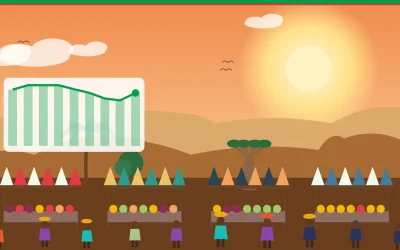
The World Bank finds Burkina Faso’s real output tripled in two decades while income per person did not double and poverty numbers held. Population growth ate most of the gains.
Ethiopia’s birr float is a strategic model: sequenced liberalisation with an IMF backstop, transferable only where local export and reserve buffers hold.
Somalia’s US$4.5bn HIPC debt relief is a repeatable model: reform earns a clean balance sheet. What transfers across East Africa and what does not.