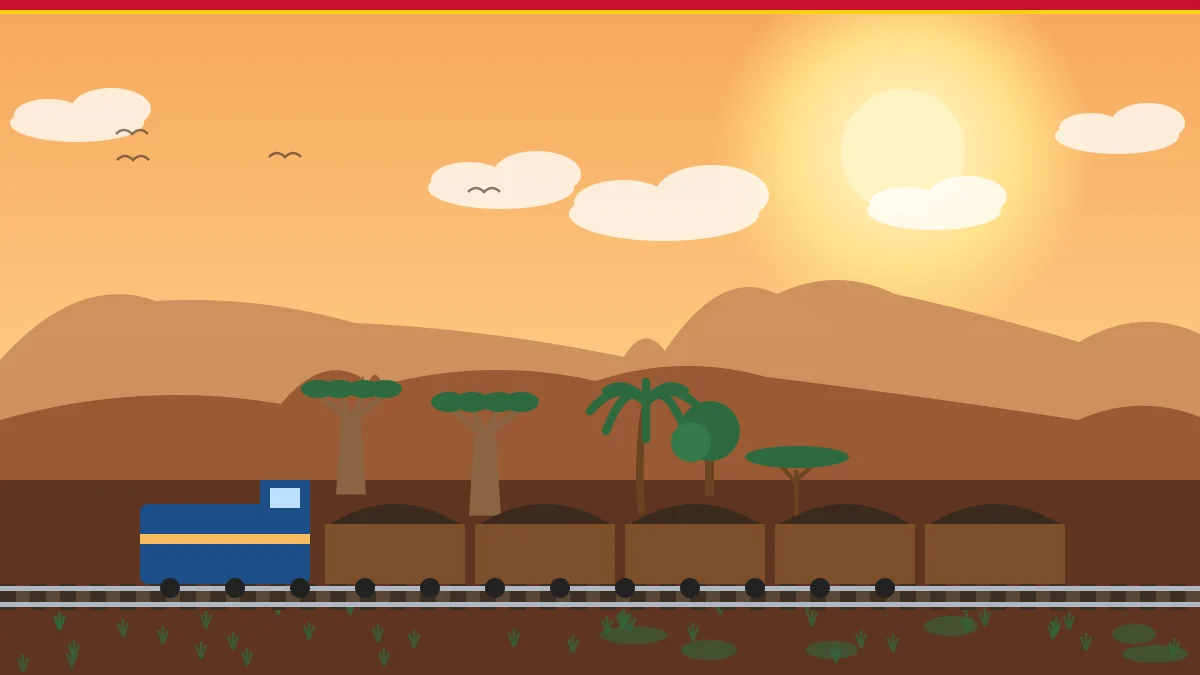
One of the largest mining projects in the world is now operating in Guinea. On 11 November 2025, the Simandou iron ore project began operations, with a ceremony at the new port in Forécariah. At full capacity, Simandou can produce up to 120 million tonnes of high-grade iron ore a year, moved to the coast on more than 600 kilometres of new railway.
"Simandou is more than a mining project: it is the driving force behind a national transformation," said Djiba Diakité, Minister and Director of the Office of the President of Guinea, according to Rio Tinto.
For Guinea's economy, and for businesses around it, the start of operations changes the scale of what is possible.
Decades in the Making
The ground is a deposit known for decades but blocked by its location. Simandou lies deep in Guinea's interior, far from the coast. Without a railway and a port, the ore could not be exported. Disputes over licences, financing and infrastructure delayed development for more than twenty years.
The project now combines two mining blocks, a trans-Guinean railway and a deep-water port. On the Rio Tinto side, the SimFer joint venture is owned 15% by the government of Guinea and 85% by a partnership in which Rio Tinto holds 53% and a Chinalco-led group 47%. Chinese partners are developing the other blocks.
"Today we are unlocking an exceptional new source," said Simon Trott, Rio Tinto's chief executive.
How Simandou Changes the Economy
The mechanism is volume and infrastructure. At full output, Simandou's exports would rank among the largest single-project mining exports in the world. Export earnings, government revenue from royalties, taxes and dividends, and foreign currency inflows will all rise substantially as production ramps up.
The railway and port are as important as the mine. They are designed to carry freight and passengers as well as ore, and the corridor runs through regions previously poorly connected. That creates the possibility of agriculture, trade and other industries along the route, if access is opened to other users.
Guinea's government has framed the project through its Simandou 2040 plan, which aims to use mining revenue for development and diversification.
What It Means for Business
The consequence is a large new market around the mine, rail and port. Operations need fuel, maintenance, spare parts, catering, accommodation, security, transport, construction and professional services. Local content rules require mining companies to buy goods and services in Guinea where possible.
Towns along the corridor and near the port will grow, increasing demand for housing, retail, food and services. Farmers and processors in the corridor gain a potential route to market.
The risks are concentration and governance. Simandou will make Guinea's economy even more dependent on mining and on Chinese demand for steel. How revenue is managed will determine its broader impact.
The Ramp-Up Matters More Than the Ceremony
A start of operations is not the same as full production. Large iron ore projects usually take several years to reach nameplate capacity, as mines expand, the railway increases the number of trains it runs and the port builds up its loading rate. Early shipments are small compared with the 120-million-tonne capacity, and each stage of the ramp-up brings its own technical challenges.
That matters for businesses planning around Simandou. Demand for supplies and services will grow in steps rather than all at once. Contracts for construction will taper while contracts for operations, maintenance and logistics expand. Suppliers that plan for the long operating phase, rather than the construction peak, will be better placed.
The ramp-up also determines when Guinea's public finances feel the effect. Royalties and taxes rise with volumes, and dividends depend on the joint venture becoming profitable after its large capital costs. The fiscal impact will build over several years.
The Price Question
Simandou's ore is high grade, which makes it attractive to steelmakers seeking to reduce emissions and improve efficiency. But the project enters a market where China, the largest buyer, is changing. Chinese steel output has levelled off, and new supply from Simandou will compete with established producers in Australia and Brazil.
If iron ore prices fall as new supply arrives, Guinea's earnings per tonne will be lower than past forecasts suggested, though high-grade ore usually commands a premium. Businesses and investors should treat price forecasts with caution and focus on what volumes will move, because volumes drive demand for local goods and services regardless of price.
The government's ability to use revenue well under the Simandou 2040 plan will matter most for the wider economy. A clear rule for saving and investing mining income would make the boom more durable. ## Build Along the Corridor
The decisive point is that Simandou's start-up creates the largest single business opportunity in Guinea's history. Local and regional firms should position as suppliers, meet the standards of the operators and target the towns along the corridor.
Investors should watch whether the railway opens to third-party freight. If it does, Simandou could transform not only Guinea's exports, but its whole interior economy.