In Mali, a drought is a financial event as much as a climatic one, and herders bear most of the loss. The World Bank's 2023 Economic Update for Mali devoted its special chapter to strengthening the financial resilience of pastoralists to drought. It argued that tools to protect herders should be in place before the rains fail, not after.
That creates a market. Protecting livestock wealth against drought is a business that insurers, lenders and payment providers can build.
The Scale of the Exposure
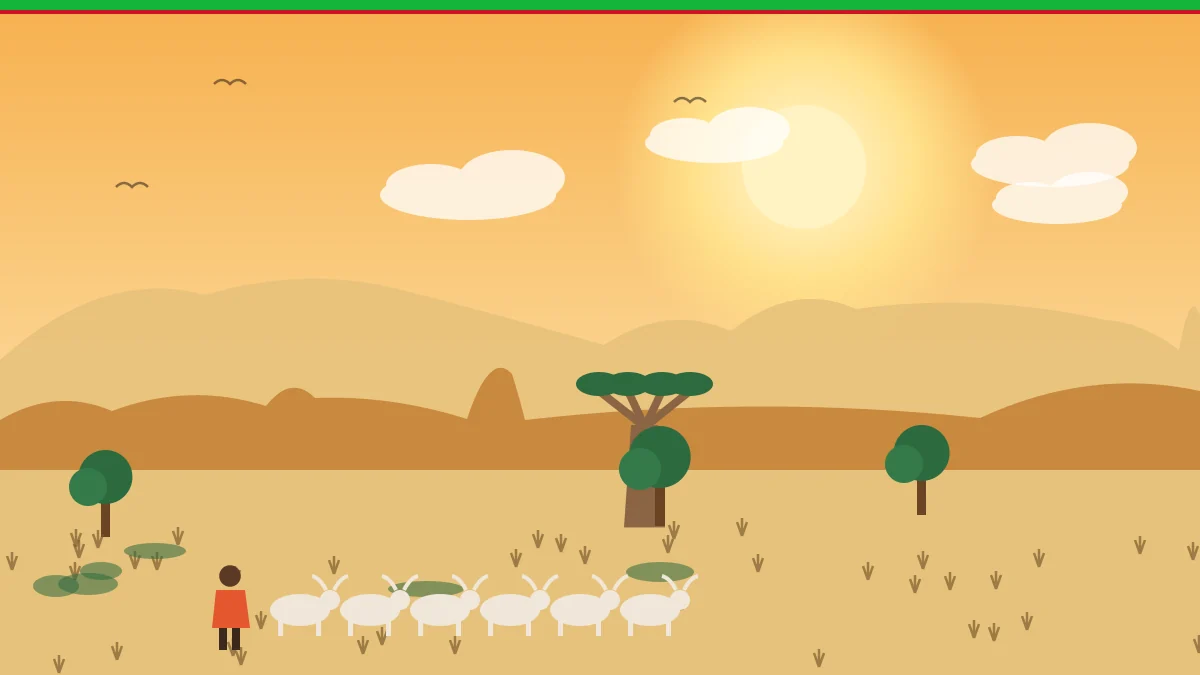
The ground is a country repeatedly hit by climate shocks. The Bank found that Mali experienced at least 40 major climate shocks between 1970 and 2020. Drought affected about 400,000 people each year and reduced crop revenues by about US$9.5 million annually. Livestock, one of the most important economic sectors in the country, is especially exposed. When pasture and water fail, animals lose condition, prices collapse as herders sell in distress, and some animals die.
For a pastoral family, the herd is savings, income and collateral at once. Losing it in a drought wipes out years of accumulation.
How Drought Finance Works
The mechanism the Bank examines is risk transfer before the shock. Traditional emergency aid arrives after a drought is declared, often months later, when animals have already been sold cheaply or lost. Index-based insurance works differently. Instead of assessing each herder's losses, it pays out when a measurable index crosses a trigger, typically vegetation cover measured by satellite over a grazing zone. When pasture falls below the threshold, all insured herders in that zone are paid automatically.
Early payment changes behaviour. With cash in hand at the start of a dry spell, a herder can buy fodder and water, move animals to better grazing or protect the core breeding stock instead of selling at the bottom of the market. The Bank's analysis identifies large parts of Mali where such instruments could work, covering a majority of the country's livestock.
Pastoral mobility is why ordinary credit and insurance products often fail here. Herds move across districts and borders, so products built for fixed farms do not fit.
Where Businesses Fit
The consequence is a role for several kinds of firm. Insurers can design and price index products, often with reinsurance and with premium support from governments or donors in the early years. Mobile-money operators can collect premiums and pay claims to herders wherever they are, which solves the problem of reaching a mobile population. Microfinance institutions and banks can bundle insurance with livestock loans, because insured herds are safer collateral. Feed and veterinary suppliers gain customers who now have cash at the moment it is needed.
Building the market takes time. Herders need to trust that the index reflects their reality, payments must arrive quickly, and premiums must be affordable. Public co-financing is usually needed at the start.
Lessons From the Region
Index insurance for pastoralists has been tested in several countries. In Kenya and Ethiopia, programmes have paid herders when satellite data showed pasture had fallen below set thresholds, allowing them to buy feed and water and protect their animals. In the Sahel, regional initiatives have explored similar products for herders in Senegal, Mali, Niger and other countries.
The experience shows what works. Payouts must arrive quickly, before herders are forced to sell. The index must match conditions herders actually face, or trust erodes. Premiums often need subsidies at first, especially for poor herders. And delivery through mobile money and trusted local agents helps reach mobile populations.
These lessons can guide the design of products in Mali, where the need is large and the market is still undeveloped.
Sovereign Risk Finance
Beyond individual insurance, governments can protect their budgets against drought through sovereign risk pools. The African Risk Capacity, a pan-African mutual insurance mechanism, allows member countries to buy cover that pays out when drought crosses a set threshold, giving governments money to fund emergency response quickly.
Such cover reduces the need to divert budget funds or wait for international appeals after a disaster. Payouts can fund cash transfers, feed distribution or other support for affected households.
For businesses, sovereign risk finance and herder insurance together create a more stable rural economy. When drought strikes, money reaches herders and households faster, protecting their assets and their ability to spend. Feed suppliers, veterinary services and traders in pastoral areas benefit from that stability. Insurers, reinsurers and mobile-money operators that build these products help create a market that protects one of Mali's most important economic sectors. ## The Business Case for Prevention
Drought will recur in Mali. The question is whether the losses keep falling on herders alone. Insurers and payment providers active in the Sahel should look at pastoral index insurance as a product line that can be distributed through mobile wallets and backed by public risk-sharing.
Lenders have a matching opportunity in livestock finance bundled with drought cover. Each herd protected before a drought is wealth that stays in the rural economy, and a customer who stays solvent.