Niger's new oil income arrives in an economy where most people still live from farming and herding. The World Bank's 2025 Niger Economic Update devoted its special chapter to the agri-food system. It identified irrigation, climate-smart technology, value-chain development and producer organisations as the main levers for resilience.
The question for the state, and for investors, is whether oil revenue gets put to work on those levers.
A Food System at the Mercy of Rain
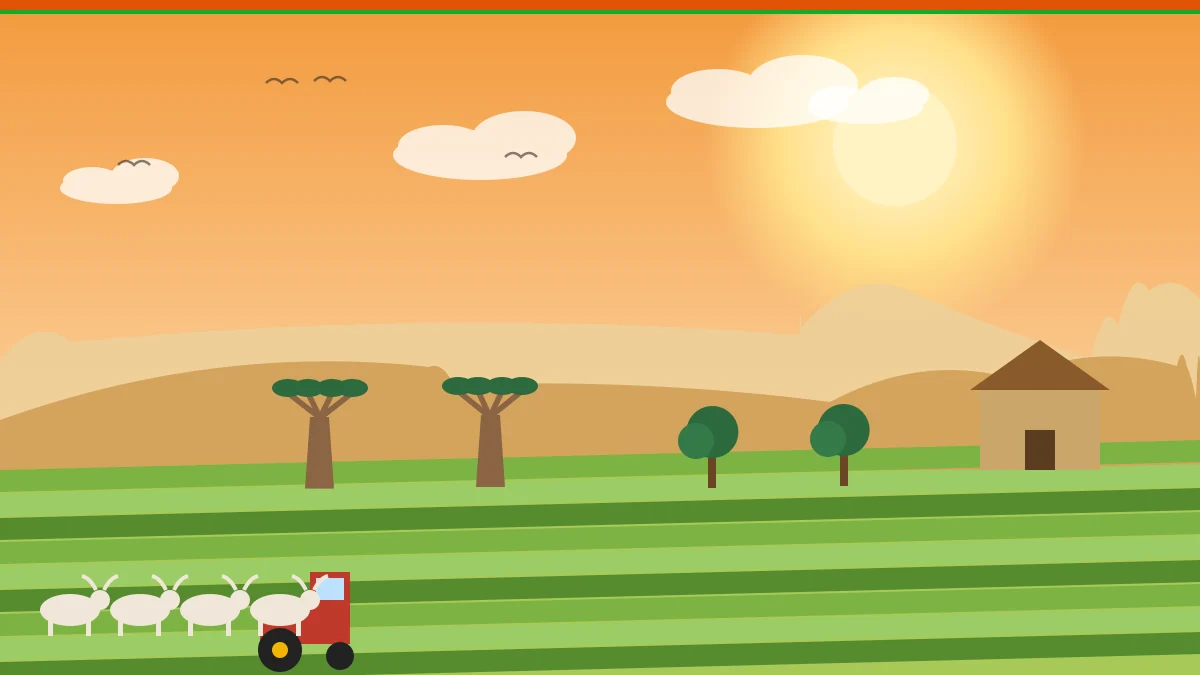
The ground is a farm economy exposed to the Sahel climate. Most Nigeriens grow millet, sorghum, cowpea and groundnuts on rain-fed land, or raise cattle, sheep, goats and camels. In a good year such as 2024, output rises and food is more plentiful. In a dry year, harvests fail, pasture disappears and food insecurity spreads quickly.
Population growth adds pressure. The number of people to feed grows fast, while farmland is limited and soils are often poor. Without higher productivity, food security cannot keep up.
How the Four Levers Work
The mechanism of each lever is different. Irrigation removes dependence on rainfall. Niger has the Niger River, seasonal rivers and groundwater, and small-scale irrigation for vegetables, rice and fodder can produce crops in the dry season and in poor rainy years.
Climate-smart technology covers drought-tolerant seed, soil and water conservation, better livestock breeds and feed, and weather information. These raise output and reduce losses when conditions are bad.
Value-chain development links farmers to buyers and processors through storage, processing, transport and contracts. It raises the price farmers get and reduces post-harvest losses.
Producer organisations let smallholders buy inputs in bulk, access credit, share equipment and sell collectively, giving them bargaining power they lack alone.
Each lever needs investment, much of it public at the start, such as irrigation infrastructure, research and extension. Oil revenue creates the fiscal room to make it.
What It Means for Business
The consequence is a set of markets that public investment in agriculture would open. Irrigation equipment, including solar pumps, drip systems and wells, has a large potential market among smallholders and farmer groups. Seed and input suppliers can sell climate-adapted varieties. Processors of cowpea, onions, groundnuts, milk and meat can source from organised producers.
Livestock is a particular opportunity. Niger exports animals to coastal markets, and processing meat, hides and dairy at home would add value. Feed production and veterinary services support herd productivity.
Where Investment Is Most Needed
Of the four levers, irrigation carries the largest potential gain and the largest cost. Niger has more water than its dry landscape suggests. The Niger River runs through the southwest, seasonal rivers and wetlands fill in the rainy season, and groundwater lies beneath much of the south. Small-scale irrigation using wells, pumps and drip systems can let farmers grow vegetables, rice and fodder in the dry season and protect crops when the rains fail.
Onions are already an example. Nigerien farmers grow large quantities under irrigation in the dry season and sell across West Africa. Similar systems could expand production of other vegetables, rice and animal feed.
Solar pumps have made small-scale irrigation more affordable, because they remove the fuel cost of diesel pumps. Financing remains the main barrier for smallholders.
Livestock and the Herding Economy
Livestock is the other pillar of Niger's agri-food system. Herders move cattle, sheep, goats and camels across the country and into neighbouring states, and live animals are a major export to Nigeria and coastal markets. Livestock is wealth, savings and income for millions of households.
The levers apply here too. Better animal health services, improved breeds and feed production raise productivity. Water points and protected corridors along herding routes reduce losses in dry seasons and conflict with farmers. Processing meat, hides and milk at home adds value that is now captured elsewhere.
Investors in feed mills, veterinary supplies, abattoirs and dairy collection would serve one of the largest parts of the rural economy. Producer organisations of herders, like those of farmers, can make it easier for businesses to buy and sell at scale.
Producer organisations are the link that makes the other levers work at scale. A single smallholder cannot buy a solar pump, negotiate with a processor or obtain credit on reasonable terms. A cooperative of several hundred can. Businesses that want to sell inputs, equipment or services to Nigerien farmers, or to buy their produce, will usually find it more efficient to work through these groups. Strengthening their management, accounts and governance is therefore an investment that pays off for both farmers and the firms that deal with them.
Turn Oil Into Harvests
The decisive point is that Niger's oil revenue can either be consumed or invested, and agriculture is where investment would reach most people. Businesses in irrigation, inputs, processing and livestock should position to work with public programmes and producer organisations.
Investors should watch the budget for allocations to agriculture and irrigation. If oil money flows to the farms, so will the commercial opportunities.