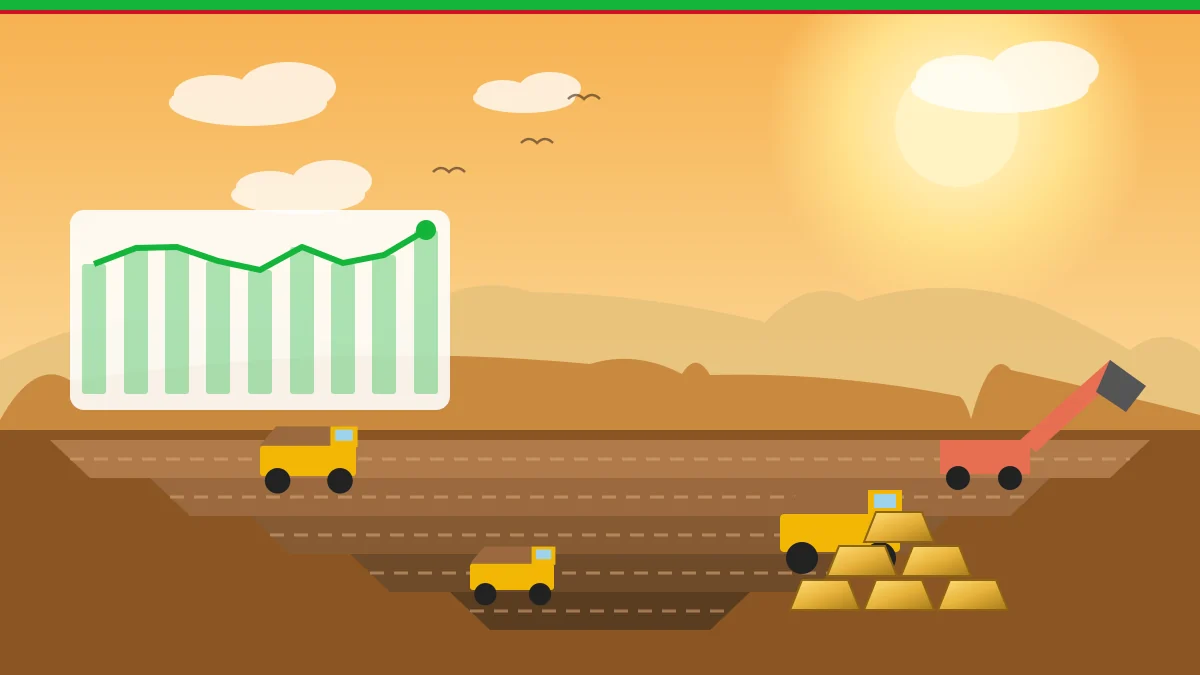
Mali's external accounts are being rebuilt by two minerals at once. Gold is recovering from a year of lost output, and lithium is new. When IMF management approved the second and final review of Mali's Staff-Monitored Program on 18 March 2026, it pointed to gold production recovering after a weak 2025 and to lithium exports that had come in stronger than expected.
For importers, banks and anyone who needs foreign exchange in Bamako, the question is how much of that mineral income stays in the country once the fuel bill is paid.
A Programme That Held
The programme was approved in March 2025 to anchor fiscal sustainability, strengthen governance and public financial management, and protect vulnerable households. The final review found that all quantitative and indicative targets had been met, including priority social spending and net tax revenue. A staff-monitored programme carries no IMF money. It is a track record that can lead to a funded arrangement later. Meeting every target despite a difficult 2025 gives Mali a stronger case for that next step.
The hard year came from gold. Mali's dispute with Barrick over the Loulo-Gounkoto complex shut one of the country's largest mines for much of 2025. It included the seizure of about three tonnes of gold and the appointment of a provisional administrator. When the dispute was settled in November 2025, Barrick's director for West Africa, Mamadou Samake, said in a video distributed by the government: "Barrick is aiming to restart operations by 1 January 2026." The recovery the IMF describes rests largely on that restart.
How Mineral Earnings Become Foreign Exchange
The mechanism is less direct than it looks. Mali sits inside the West African Economic and Monetary Union, so it does not hold its own reserves. Export proceeds pass through commercial banks to the regional central bank, the BCEAO, which manages the union's pooled reserves. A strong gold year in Mali adds to that pool and eases the dollar liquidity that Malian banks can offer importers. A weak one drains it.
Not all of the export value comes home. Industrial mines are largely foreign-owned and financed. Part of the receipts goes on imported fuel, explosives and equipment, on debt service and on dividends abroad. What stays in Mali is mainly royalties, taxes, the state's equity share, local wages and local purchases. Lithium changes this picture. It adds a second export with different buyers and prices, so Mali's earnings no longer depend on gold alone, but it also adds imported inputs and processing costs. The US Geological Survey's country profile tracks Mali's growing mineral base, and lithium is the newest part of it.
What decides the outcome is the balance between mineral receipts and the import bill, not the export headline.
Fuel Is the Swing Factor
The risk the IMF flags is fuel. Mali is landlocked and imports all of its refined petroleum, mostly by road through Senegal, Côte d'Ivoire and Guinea. Mines themselves are heavy fuel users. A rise in oil prices or freight costs therefore cuts into both the trade balance and mining margins at once. Disruption on the main supply roads raises the same costs again through delays and security premiums.
For businesses, this has a concrete consequence. Firms that import inputs priced in dollars or euros should expect foreign-exchange availability to follow gold shipments and fuel prices more than any announcement. Distributors and manufacturers can manage this by timing large import orders around periods of strong export receipts. They can also build relationships with banks that hold mining-sector deposits, because those banks see the dollar inflows first.
Why Lithium Is Different From Gold
Gold has been the backbone of Mali's exports for decades, sold into a deep, liquid market where prices are set daily and buyers are always available. Lithium is newer and behaves differently. It is sold mainly as spodumene concentrate to processors, largely in China, under contracts that depend on battery demand. Prices have swung widely in recent years, rising sharply in the electric-vehicle boom and then falling as new supply arrived.
That means lithium earnings are harder to forecast than gold earnings. A new lithium mine can add significantly to exports in a good year and much less in a weak one. For Mali's external accounts, lithium adds diversity, which helps, but it also adds a new source of volatility.
Lithium projects also depend on long export routes. Concentrate must travel by road to coastal ports, adding transport costs and exposure to disruptions along the corridor.
The Fuel Bill on the Other Side
Mineral earnings are only half of Mali's external balance. The other half is what the country spends on imports, and fuel is the largest swing item. As a landlocked country, Mali imports all its petroleum products by road from coastal ports. When world oil prices rise, or when supply routes are disrupted, the import bill climbs quickly.
Fuel shortages also affect the economy directly, slowing transport, electricity generation and mining operations. A year of strong gold and lithium exports can be offset by a high fuel bill, and a disruption to fuel supply can hit growth regardless of mineral earnings.
For businesses, that means watching both sides of the ledger. Gold prices and mine output show what is coming in. Fuel prices and the security of supply routes show what is going out. Together, they determine how much foreign currency is available for importers and how stable the economy will be. ## The Move to Make
Mali's 2026 outlook is better than its 2025 one, and the programme record gives it credibility it lacked a year ago. But the mineral recovery depends on Loulo-Gounkoto reaching steady output, on lithium shipments holding volume and price, and on fuel staying affordable.
Operators should plan around the external balance, not the mineral headline. In practice, that means watching three published numbers: monthly gold export volumes, lithium shipment values and the fuel import bill. Pricing, inventory and financing decisions in Mali should be tied to the gap between export receipts and the fuel bill.